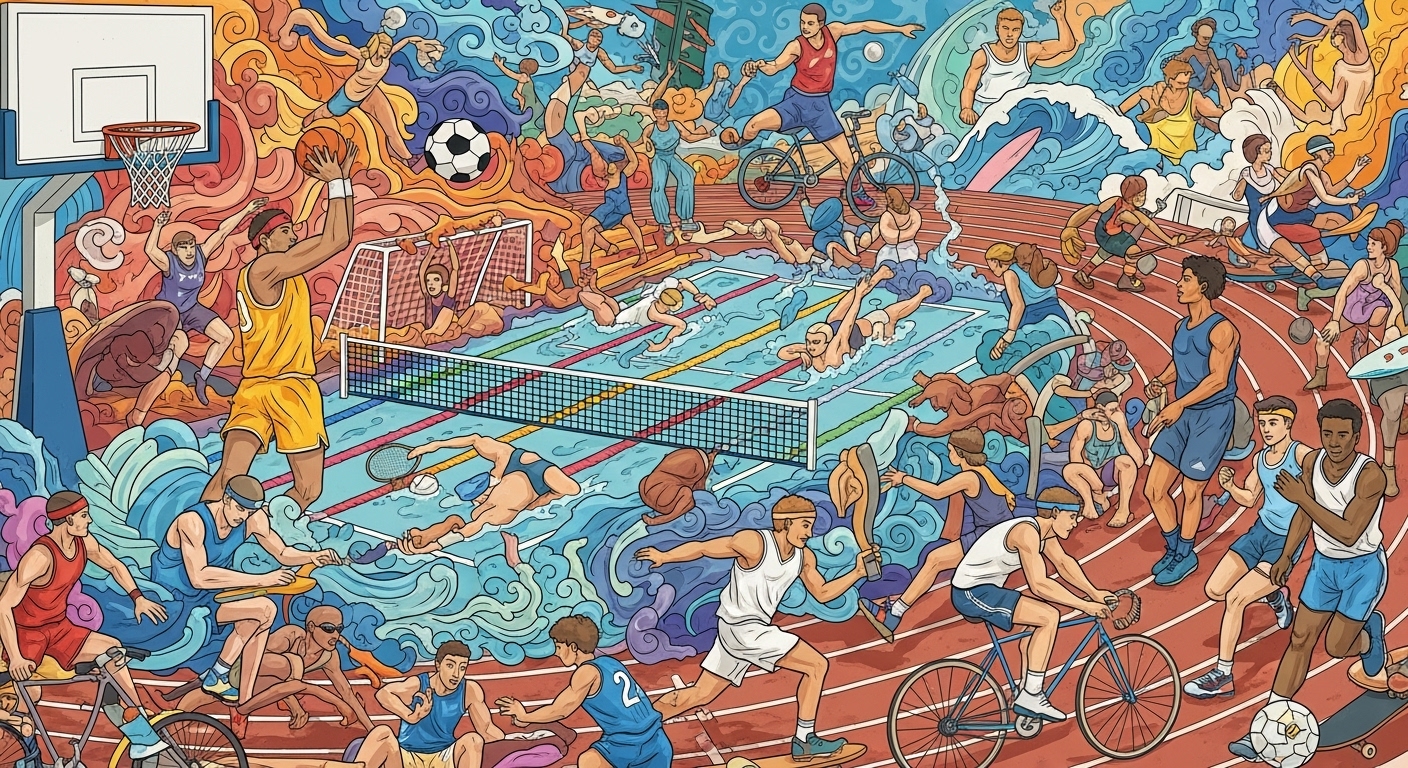

Sports have been a fundamental part of human culture for thousands of years. From the ancient Olympic Games to the modern-day global spectacles like the FIFA World Cup and the Olympics, sports have evolved in ways that reflect the changes in society, technology, and human ambition. This blog post takes a deep dive into the history, significance, and future of sports, highlighting how they have transformed over time and their impact on society.
The Origins of Sports: A Glimpse into Ancient History
Sports, in their most basic form, have been around for as long as humans have existed. Early evidence of sporting activities dates back to ancient civilizations where they were often tied to religious practices, warrior training, and rites of passage.
Ancient Egypt and Mesopotamia
The first recorded instances of competitive sports can be traced to the ancient civilizations of Egypt and Mesopotamia. In these societies, sports such as archery, running, and wrestling were practiced not only for entertainment but also for military preparation. For example, the ancient Egyptians organized chariot races and wrestling competitions, which were part of their festivals and celebrations. Similarly, the Mesopotamians had ball games that were precursors to modern-day football.
The Greek Influence: The Birth of the Olympics
The most significant early influence on the development of modern sports comes from Ancient Greece. The Greeks are credited with organizing the first Olympic Games in 776 BCE. These games were initially a religious festival dedicated to Zeus, the king of the Greek gods. The Olympics were held every four years at Olympia and featured events such as footraces, wrestling, and the pentathlon, which included running, jumping, throwing the discus, and wrestling.
The significance of the Olympics extended beyond the competition itself. The Games were a symbol of unity and peace, as city-states would often observe a truce during the event. This idea of using sports as a platform for peace and diplomacy would influence the way we view international sporting events today.
The Middle Ages and Renaissance: Sports in the Shadows of War
The Middle Ages was a time of great political upheaval, and as a result, the development of organized sports stagnated in Europe. However, physical games and activities continued to be practiced in various forms, although they were often linked to military training and tournaments.
Jousting and Archery
In medieval Europe, knights participated in jousting tournaments to demonstrate their skill and bravery. These events were not only a form of entertainment but also a means of showcasing military prowess. Archery, too, became a popular sport, especially in England, where it was essential for preparing soldiers for warfare.
While these sports were tied to military culture, they were also important social events, with spectators gathering to watch the tournaments and competitions. In many ways, they laid the foundation for the competitive sports that would flourish in the centuries to come.
The Renaissance: A Revival of Classical Ideals
During the Renaissance, there was a resurgence of interest in the ideals of Ancient Greece and Rome. This period saw the re-emergence of organized athletic competitions and the recognition of sports as an important aspect of human development. The Italian city-states, for example, organized public festivals that included physical contests and games, inspired by the classical Greek tradition.
The Rise of Modern Sports: The 19th Century Revolution
The 19th century was a period of profound change in the world, driven by industrialization, urbanization, and the growth of the middle class. These social changes played a pivotal role in the birth of modern sports as we know them today.
The Industrial Revolution and Public Education
With the rise of industrialization, the structure of society shifted. Urbanization brought people together in cities, and there was an increasing focus on physical well-being. The idea that regular exercise was important for health began to take root, and this played a key role in the establishment of organized sports.
Schools and universities in England, particularly in the 19th century, began to emphasize the importance of sports as part of a well-rounded education. The famous “public school” system in Britain, which included institutions like Eton and Rugby, is credited with shaping many of the modern team sports we know today, such as football (soccer), cricket, and rugby.
The Codification of Sports Rules
One of the key developments during the 19th century was the formalization and codification of sports rules. Games that had previously been played in informal and regional variations were standardized, which allowed them to be played and enjoyed on a broader scale. For example, the first modern football rules were established in 1863 when the Football Association was founded in England, leading to the creation of association football (soccer) as we know it today. Similarly, rugby, cricket, and baseball all saw formalized rulebooks emerge during this time.
The 20th Century: The Explosion of Global Sports
The 20th century witnessed the rapid globalization of sports, driven by advances in communication, travel, and technology. Sports, once confined to local or national levels, became global phenomena, and the emergence of television and mass media further expanded their reach.
The Olympics and International Competitions
The modern Olympic Games, revived in 1896 by Pierre de Coubertin, became the most significant international sporting event in the world. The Games were designed to promote peace and understanding through athletic competition, and over time, they have become a symbol of unity among nations.
In addition to the Olympics, other major international sporting events like the FIFA World Cup (established in 1930) and the Tour de France (since 1903) attracted global audiences. These events highlighted the power of sports to bring people together across cultures, transcending political and geographical boundaries.
The Commercialization of Sports
The rise of commercial television in the mid-20th century changed the landscape of sports forever. With broadcasters eager to sell advertising space, sports became increasingly commercialized, and athletes began to earn substantial salaries. Iconic figures like Muhammad Ali, Pelé, and Michael Jordan became household names, transcending their respective sports and becoming global celebrities.
The commercialization of sports also led to the creation of professional leagues in many countries, with athletes competing at the highest levels for both glory and financial gain. Today, professional leagues like the NBA, NFL, Premier League, and La Liga are watched by millions of fans worldwide.
Sports and Society: The Role of Sports in Modern Life
Sports have always been more than just games; they reflect the values and aspirations of society. Whether it’s the pursuit of excellence, the celebration of teamwork, or the demonstration of physical prowess, sports have become a mirror of our cultural and social beliefs.
Social Movements Through Sports
In the 20th and 21st centuries, athletes have used their platform to push for social change. Icons like Jackie Robinson, who broke the color barrier in Major League Baseball, and Muhammad Ali, who famously protested against the Vietnam War, used sports as a stage for their political activism. The power of sports to influence social change was further demonstrated by the Black Lives Matter movement, with athletes like Colin Kaepernick taking a stand against racial injustice.
Sports and National Identity
Sports also play a significant role in shaping national identities. International competitions like the Olympics and World Cup provide nations with an opportunity to demonstrate their prowess on the global stage. The victories of athletes often lead to national pride and a sense of unity. For example, when the U.S. men’s basketball team won gold at the 1992 Barcelona Olympics, it was seen as a victory not just for the team, but for American ideals of freedom and competition.
The Future of Sports: What Lies Ahead?
The future of sports is likely to be shaped by several key trends, including technological innovations, changing fan preferences, and the growing influence of esports.
Technology and Innovation
Advances in technology will continue to revolutionize the way we experience and participate in sports. From augmented reality (AR) and virtual reality (VR) experiences to smart gear and analytics, technology is enhancing the way athletes train and compete. Virtual sports leagues are also gaining in popularity, allowing gamers to compete in simulated versions of traditional sports, further blending the worlds of physical and digital play.
The Rise of Esports
Esports, or competitive video gaming, has exploded in popularity in recent years. What began as a niche hobby has now grown into a multi-billion-dollar industry, with professional leagues, sponsorships, and global tournaments. In some parts of the world, esports have become just as popular, if not more so, than traditional sports. The integration of esports into mainstream culture is a reflection of how sports continue to evolve and adapt to new interests and technologies.
Conclusion: A Timeless Passion
Sports have evolved immensely from their ancient origins to the global, multi-billion-dollar industries they are today. They continue to captivate millions of people around the world, whether as players, spectators, or fans. The story of sports is intertwined with the history of humanity itself, reflecting our aspirations, struggles, and triumphs.
As technology advances and societal trends shift, sports will undoubtedly continue to change, but one thing is certain: the love of the game will remain timeless. Whether it’s through traditional sports or new forms like esports, sports will continue to unite, inspire, and entertain for generations to come.