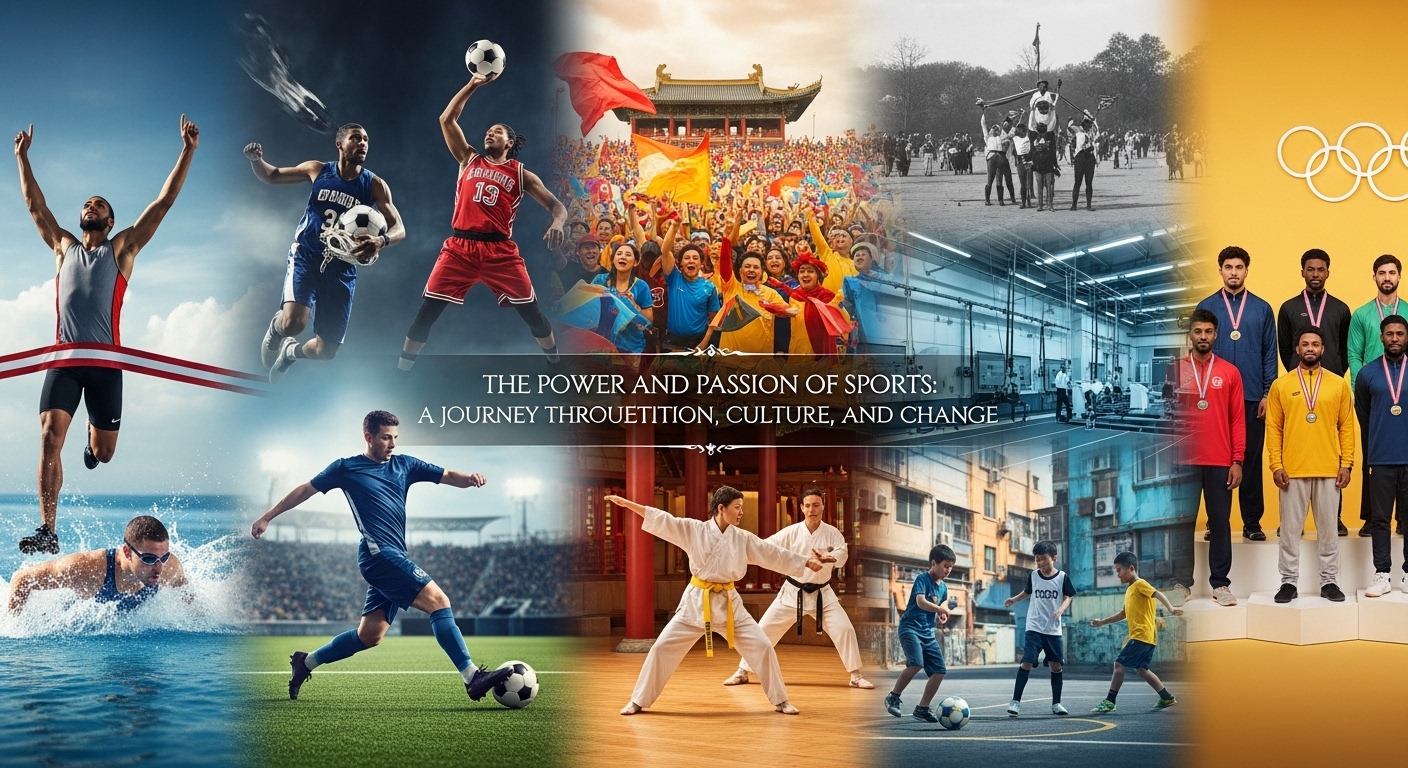

Sports have always held a special place in human culture, transcending geographical boundaries, political divides, and social classes. From ancient civilizations to the modern-day Olympics, sports have served as a means of bringing people together, celebrating human achievement, and showcasing the best of athleticism. But as we look to the future, the world of sports is undergoing a radical transformation. With technological advancements, shifting societal expectations, and a growing push for inclusivity, sports are no longer just about the physical prowess of athletes but also about the evolving landscape of how we engage with them.
In this post, we’ll dive into some of the most significant changes in sports, including the role of technology, the rise of e-sports, the fight for equality, and the emerging trends that are reshaping the industry.
The Rise of Technology in Sports
From Performance Enhancement to Fan Experience
Technology has infiltrated nearly every aspect of sports, enhancing both the athletes’ performance and the fan experience. Athletes now benefit from data analytics, wearables, and advanced training equipment that provide real-time feedback on their performance. GPS trackers and heart-rate monitors allow coaches to tailor training sessions to an athlete’s specific needs, pushing them to new heights while preventing injury.
For example, soccer teams now use GPS-based monitoring systems to track a player’s movement, speed, and endurance during games. This data helps coaches make informed decisions about substitutions, while also offering insight into how players can improve their performance.
Moreover, technologies like VAR (Video Assistant Referee) have been introduced in sports like soccer and rugby to ensure that decisions are made more accurately and fairly. The implementation of video replay in these sports has been met with mixed reactions; however, it represents the increasing role of tech in ensuring fairness and reducing human error.
Off the field, sports broadcasters have also embraced technology to enhance viewer engagement. High-definition broadcasts, virtual reality (VR) experiences, and interactive apps are becoming common, allowing fans to feel closer to the action than ever before. Virtual reality, for example, lets viewers experience games from the perspective of an athlete, offering a completely new level of immersion.
Data and Analytics: The New Frontier
Data analytics have revolutionized how teams approach strategy. In sports like basketball, baseball, and football, advanced statistical models are now used to analyze performance, predict outcomes, and make decisions. The use of “Moneyball” strategies, inspired by baseball, is a well-known example of how analytics can optimize team performance.
In football, coaches are using video analytics to break down plays, study opponent tendencies, and create more effective game plans. Similarly, in tennis, Hawk-Eye technology allows players and coaches to analyze ball trajectories, giving them a deeper understanding of court positioning and shot selection.
The influence of data extends beyond just performance. Sports organizations are also using analytics to improve everything from marketing strategies to ticket sales. Understanding fan preferences and behaviors is now a key focus for teams and leagues, ensuring that they can create personalized experiences and engage with fans in meaningful ways.
The Growth of E-Sports: A Digital Revolution
Competitive Gaming Takes Center Stage
While traditional sports have been a mainstay in global culture for centuries, a new form of competition has emerged in recent years: e-sports. Competitive video gaming, or e-sports, has grown exponentially in both popularity and legitimacy. Major tournaments for games like League of Legends, Dota 2, and Fortnite now boast prize pools in the millions of dollars, drawing massive audiences both online and in person.
One of the driving factors behind the rise of e-sports is the increasing acceptance of gaming as a legitimate form of competition. Once considered a hobby or pastime, gaming is now viewed as a professional career for many. E-sports athletes train as intensely as traditional athletes, with practices, strategies, and game analysis all playing key roles in their success.
Moreover, e-sports offers something traditional sports cannot—global accessibility. Anyone with a computer or gaming console can participate in competitive gaming, allowing players from all over the world to compete on equal footing. As internet access and technology improve in developing countries, e-sports is becoming an increasingly global phenomenon.
The Impact of Streaming Platforms
Streaming platforms like Twitch and YouTube have played a crucial role in the growth of e-sports. These platforms allow fans to watch their favorite players, learn new strategies, and interact with a global community of gaming enthusiasts. Streamers and e-sports organizations have capitalized on these platforms to grow their brands, attracting millions of viewers who tune in to watch live gameplay and tournament streams.
The engagement factor of e-sports is also significant. Fans can directly interact with players and teams, ask questions, or even participate in live polls during streams. This creates a more immersive and interactive experience that is difficult to replicate in traditional sports.
The commercial success of e-sports is undeniable, with major sponsors, such as Coca-Cola, Intel, and Nike, investing heavily in the industry. Large-scale events like the League of Legends World Championship have become major spectacles, attracting audiences comparable to those of traditional sporting events.
The Fight for Equality: Diversity and Inclusivity in Sports
Breaking Barriers
Sports have long been a symbol of strength and competition, but they have also historically reflected societal inequalities. Gender, race, and disability have been barriers to entry and success for many athletes. However, over the past few decades, there has been a growing movement toward greater inclusivity and representation in sports.
One of the most significant changes has been the push for gender equality. Women’s sports have gained greater visibility and recognition, with the women’s World Cup in soccer, women’s tennis, and the WNBA receiving more attention than ever before. Athletes like Serena Williams, Simone Biles, and Megan Rapinoe have used their platforms to advocate for gender equality both on and off the field.
Moreover, the pay disparity between male and female athletes, though still present in some areas, is slowly being addressed. The U.S. women’s national soccer team, for example, successfully fought for equal pay with their male counterparts, which was a landmark moment in the pursuit of fairness in sports.
Inclusion for All
Beyond gender, sports are also becoming more inclusive for athletes with disabilities. The Paralympic Games, for instance, has grown in prominence, attracting a global audience that celebrates the incredible achievements of athletes who overcome physical challenges to compete at the highest levels. The accessibility of adaptive sports is also expanding, allowing athletes with disabilities to participate in everything from basketball to sailing.
Athletes are also challenging stereotypes and pushing for acceptance of LGBTQ+ individuals in sports. Iconic figures like Michael Sam, an openly gay NFL player, and Caitlyn Jenner, an Olympic gold medalist who came out as transgender, have paved the way for greater acceptance of diversity in sports. Teams and organizations are increasingly implementing inclusive policies, ensuring that athletes of all backgrounds feel safe and respected.
The Future of Sports: Trends to Watch
Sustainability in Sports
As environmental concerns grow, the sports industry is beginning to pay attention to its environmental impact. Stadiums are being designed with sustainability in mind, incorporating renewable energy, water conservation systems, and recycling programs. Additionally, sports organizations are adopting eco-friendly practices, from reducing single-use plastics to promoting public transportation for fans attending events.
There is also a growing trend toward sustainability in the products athletes use. Apparel companies are producing more eco-conscious gear, from shoes made with recycled materials to performance wear that minimizes waste.
The Digitalization of Sports
The digitalization of sports is another trend to watch. Sports leagues and organizations are embracing digital platforms to engage with fans in new and innovative ways. Virtual reality, augmented reality, and artificial intelligence are all being explored as ways to enhance fan experiences and provide deeper insights into games.
Fantasy sports leagues and sports betting are also becoming more mainstream, offering fans new ways to interact with the games they love. In addition, the rise of social media platforms has allowed athletes and teams to connect directly with fans, creating new forms of engagement that were previously impossible.
Conclusion: A Bright Future for Sports
Sports have always been about more than just competition—they represent our desire to push the limits of human potential, to challenge ourselves, and to find community. As the world of sports continues to evolve, embracing technology, inclusivity, and sustainability, the future looks incredibly bright.
The next generation of athletes, fans, and organizations will experience a world where innovation, diversity, and accessibility are at the forefront. Whether through the rise of e-sports, the fight for gender equality, or the environmental efforts of sports organizations, change is afoot, and it’s shaping the future of sports in exciting ways.
Ultimately, sports will continue to be a powerful force for good—uniting us across differences, inspiring us to reach new heights, and reminding us of the boundless potential of the human spirit.