
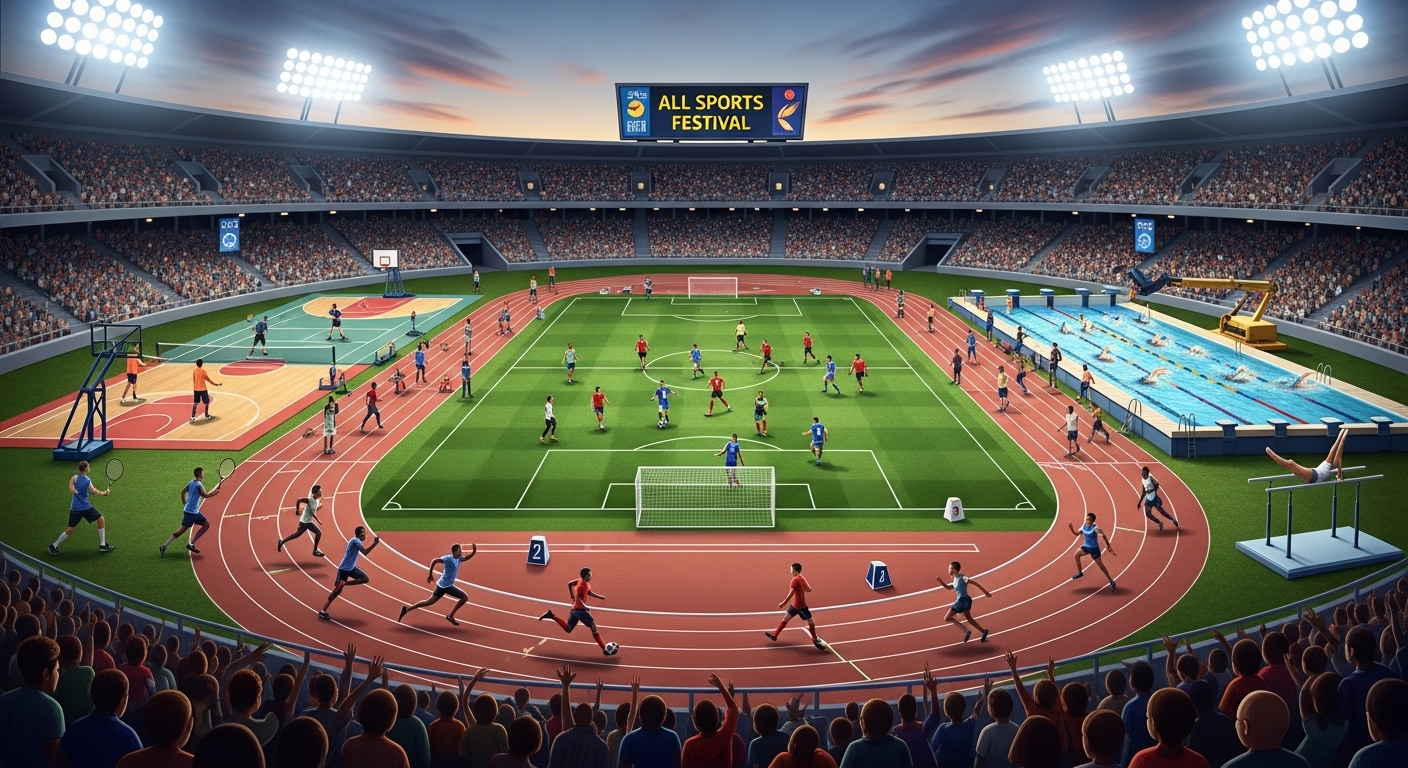
Sports, in their many forms, have been a cornerstone of human culture for centuries. From ancient civilizations where athletic prowess was seen as a sign of honor, to today’s modern-day, multi-billion-dollar industries, sports have undergone a massive transformation. They serve not only as entertainment but also as a means of social connection, personal development, and even diplomacy. In this blog post, we will dive deep into the evolution of sports, their societal impact, and where they may be headed in the future.
The Origins of Sports: A Historical Perspective
The origins of sports date back to prehistoric times when early humans engaged in physical contests for survival. However, the more organized forms of sports that we recognize today started to emerge in ancient civilizations, which utilized these competitions for religious rituals, military training, and social cohesion.
Ancient Civilizations and Early Sports
In ancient Egypt, physical contests such as archery, wrestling, and running were part of military training. These contests were not only seen as ways to stay fit for battle but were also closely linked to religious ceremonies and the celebration of deities. In Mesopotamia, evidence suggests that games similar to modern-day ball sports were played, especially in the form of team-based activities with simple rules.
However, it was Ancient Greece that truly laid the foundation for the sports we know today. The Olympic Games, which started in 776 BCE, were much more than a contest of athletic ability; they were a celebration of human excellence and a display of physical and mental strength. These Games, held in honor of Zeus, included events such as running, wrestling, boxing, and the pentathlon. The Olympics became so important in Greek society that wars were suspended during their duration, and only the fittest athletes were deemed worthy of competing.
In addition to the Greeks, the Romans also had a deep interest in physical prowess. The Romans enjoyed gladiatorial combat and other forms of entertainment such as chariot racing, which later inspired modern-day motorsports. While these events were often brutal and served as spectacles to entertain the masses, they reflected the Roman obsession with strength, discipline, and public display.
Sports in the Middle Ages: From Chivalry to Fun
After the fall of the Roman Empire, the Middle Ages saw a shift in the way people viewed and participated in sports. The primary focus during this period was survival, and physical activities were often linked to military training and the maintenance of martial skills. However, as the medieval period progressed, we began to see the development of games and sports that were played for amusement and skill-building.
Jousting and Medieval Tournaments
Jousting became one of the most prominent sports of the Middle Ages, especially among the knights and the nobility. The tournaments, which were held to showcase knightly skill and bravery, saw two knights riding towards each other with lances, attempting to unseat each other. While jousting was initially a form of combat training, it evolved into a highly popular social event, drawing large crowds and becoming a symbol of chivalric values. These tournaments were often used to settle disputes, as well as a way for knights to earn prestige and gain favor from monarchs.
In addition to jousting, archery, wrestling, and other forms of hand-to-hand combat were practiced, particularly in the context of military preparedness. These competitions, while far from the professional sports of today, were the early precursors to combat sports such as boxing, fencing, and even modern-day mixed martial arts (MMA).
Ball Games in Medieval Europe
In medieval England, various forms of ball games began to emerge. These early versions of football were played without formal rules and were often chaotic, with large numbers of participants. The objective was to move a ball from one end of a village or town to the other, often with little regard for boundaries or safety. While these games were rough and unorganized, they were the distant ancestors of modern-day soccer, rugby, and even American football.
The Renaissance and the Birth of Organized Sports
The Renaissance period in Europe marked a cultural revival and a renewed interest in both intellectual pursuits and physical fitness. During this time, sports began to take on more formalized and standardized structures, with the creation of organized clubs and the development of specific rules and regulations.
The Rise of Cricket
In 16th century England, cricket began to take shape as a formal sport. The game, which started as a simple pastime in rural communities, evolved into a more organized and competitive sport by the 17th century. The establishment of rules, such as the size of the pitch and the number of players, allowed cricket to grow in popularity. By the 18th century, cricket had become the national sport of England, and it spread to colonies around the world, particularly in India and Australia, where it continues to be a major sport today.
Tennis: From “Jeu de Paume” to Global Phenomenon
The sport of tennis also traces its roots to the Renaissance period, with the French game “jeu de paume,” or “game of the palm,” evolving into a version of tennis played with rackets. While the modern game of tennis emerged in the late 19th century, the roots of the sport can be traced back to the courts of the French and English aristocracy. The establishment of Wimbledon in 1877, one of the most prestigious tennis tournaments in the world, marked the beginning of professional tennis as we know it today.
The 19th Century: The Professionalization of Sports
With the advent of the industrial revolution and the rise of modernity in the 19th century, sports became more than just a pastime or an aristocratic pursuit. They evolved into organized, professional competitions, often driven by the increasing popularity of mass entertainment and the creation of sports leagues.
The Birth of Professional Leagues
The 19th century saw the creation of the first professional sports leagues. In 1869, the Cincinnati Red Stockings became the first professional baseball team, followed by the formation of Major League Baseball (MLB) in 1903. Similarly, American football began to grow in popularity, and in 1920, the National Football League (NFL) was formed. These leagues not only transformed the way people experienced sports but also opened up the possibility of sports becoming a viable career for athletes.
As these leagues grew, so did the concept of “team sports.” The formation of professional basketball leagues, most notably the National Basketball Association (NBA) in 1946, further cemented the idea of organized, high-profile competitions with professional athletes. In addition to the establishment of professional leagues, sports were beginning to gain international attention, with global competitions such as the FIFA World Cup and the Summer and Winter Olympics, both of which became iconic symbols of international competition and athletic excellence.
The Role of Media and Technology in Sports
With the rise of mass media, particularly television, sports became even more popular. In the mid-20th century, major sporting events such as the Super Bowl, the World Cup, and the Olympics were broadcast to millions of viewers around the world. The accessibility of these events brought sports into homes and helped develop a global fanbase, further cementing their cultural significance.
Advancements in technology also began to shape the sports industry. The use of analytics, instant replay, and performance-enhancing equipment began to revolutionize how athletes trained and how the game was played. Fans, too, began to interact with sports in new ways, following athletes and teams through digital platforms, engaging with them through social media, and consuming content through streaming services and apps.
The 21st Century: A Global Sports Culture
The 21st century has seen sports continue to evolve and expand. Globalization, technological advances, and a growing emphasis on health and wellness have all played key roles in reshaping the landscape of sports.
The Growth of Esports
One of the most significant developments in recent years has been the rise of esports, or competitive video gaming. Esports has become a global phenomenon, with major tournaments such as The International for Dota 2, League of Legends World Championships, and the Overwatch League drawing millions of viewers and offering multi-million-dollar prize pools. Esports has bridged the gap between traditional sports and the digital world, attracting a younger generation of fans and players who are just as passionate about watching and participating in video games as fans of conventional sports.
The Role of Data and Analytics in Sports
Data analytics has become an indispensable part of modern sports. From player performance metrics to game strategies and fan engagement, data has transformed how coaches, managers, and teams operate. Technologies like wearable fitness trackers, sensors, and even AI-driven analysis have given coaches and athletes the tools to optimize performance, track injuries, and improve recovery. Data is also used to assess fan behavior, helping teams and leagues market their products more effectively and increase revenue.
The Evolution of Athlete Branding and Social Media
In the 21st century, athletes have increasingly become global brands in their own right. The rise of social media platforms like Instagram, Twitter, and TikTok has given athletes a direct way to connect with fans, promote products, and build personal brands. This has led to athletes becoming influencers, transcending their sports and engaging with millions of fans in ways that were unimaginable just a few decades ago. These platforms have also provided athletes with a voice on social and political issues, further expanding their influence.
Inclusivity and Diversity in Sports
Another key trend in modern sports is the increased focus on inclusivity and diversity. Efforts to make sports accessible to people of all genders, races, and abilities have led to significant changes. Women’s sports, once marginalized, are now seeing increased media coverage and participation. There has also been a growing movement to ensure that athletes from underrepresented communities have equal opportunities to succeed, from grassroots programs to professional leagues.
The Future of Sports
As we look ahead, it is clear that sports will continue to evolve in response to changes in society, technology, and culture. The continued integration of technology, the rise of esports, and a growing focus on sustainability are just some of the trends likely to shape the future of sports. Sports will not only remain a source of entertainment and competition but will also continue to serve as a platform for social change, global unity, and personal empowerment.
In conclusion, sports have come a long way from their ancient origins, evolving from rudimentary contests of strength to the sophisticated, globally recognized spectacles we enjoy today. They have become a reflection of human ambition, a source of entertainment, and an essential part of cultural identity. No matter how much sports may change in the future, one thing remains constant: the universal appeal of competition and the unifying power of sport.