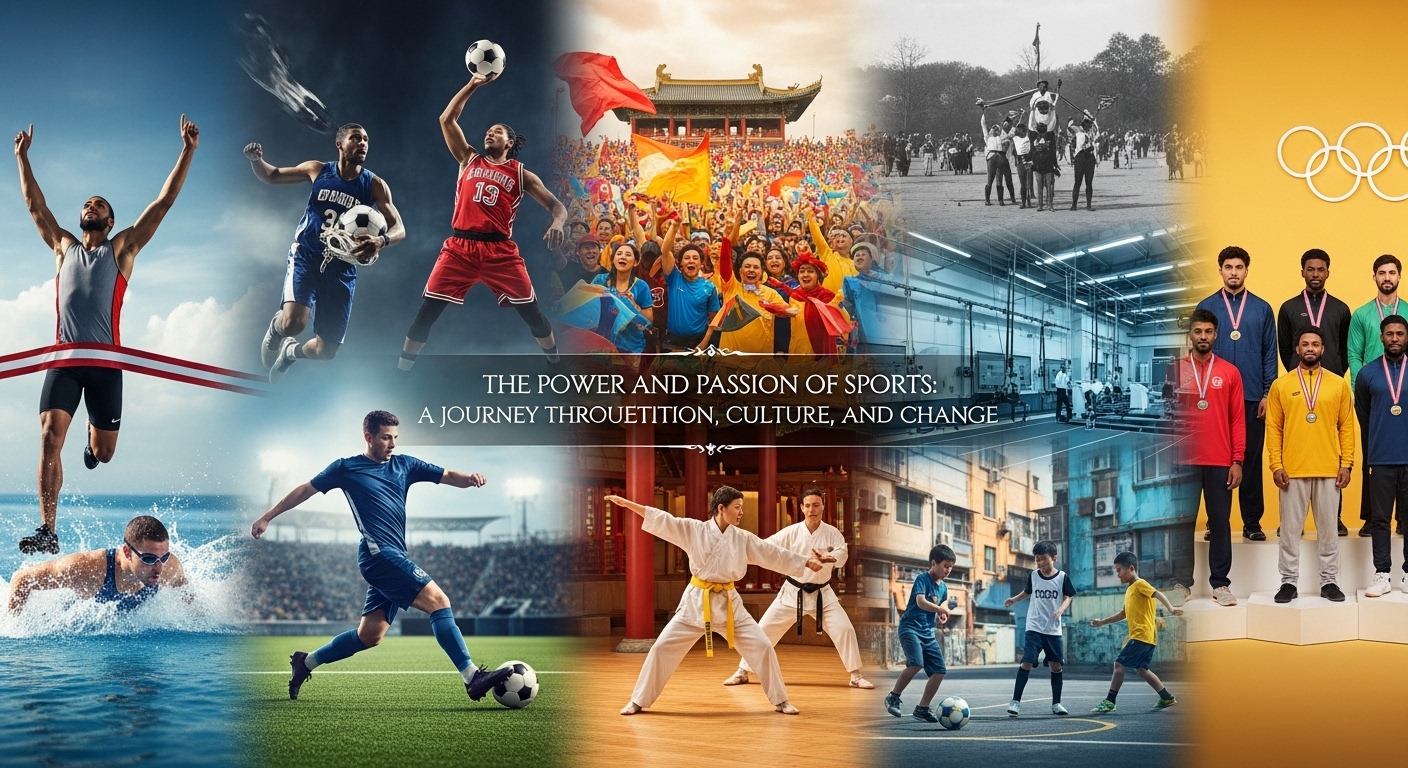
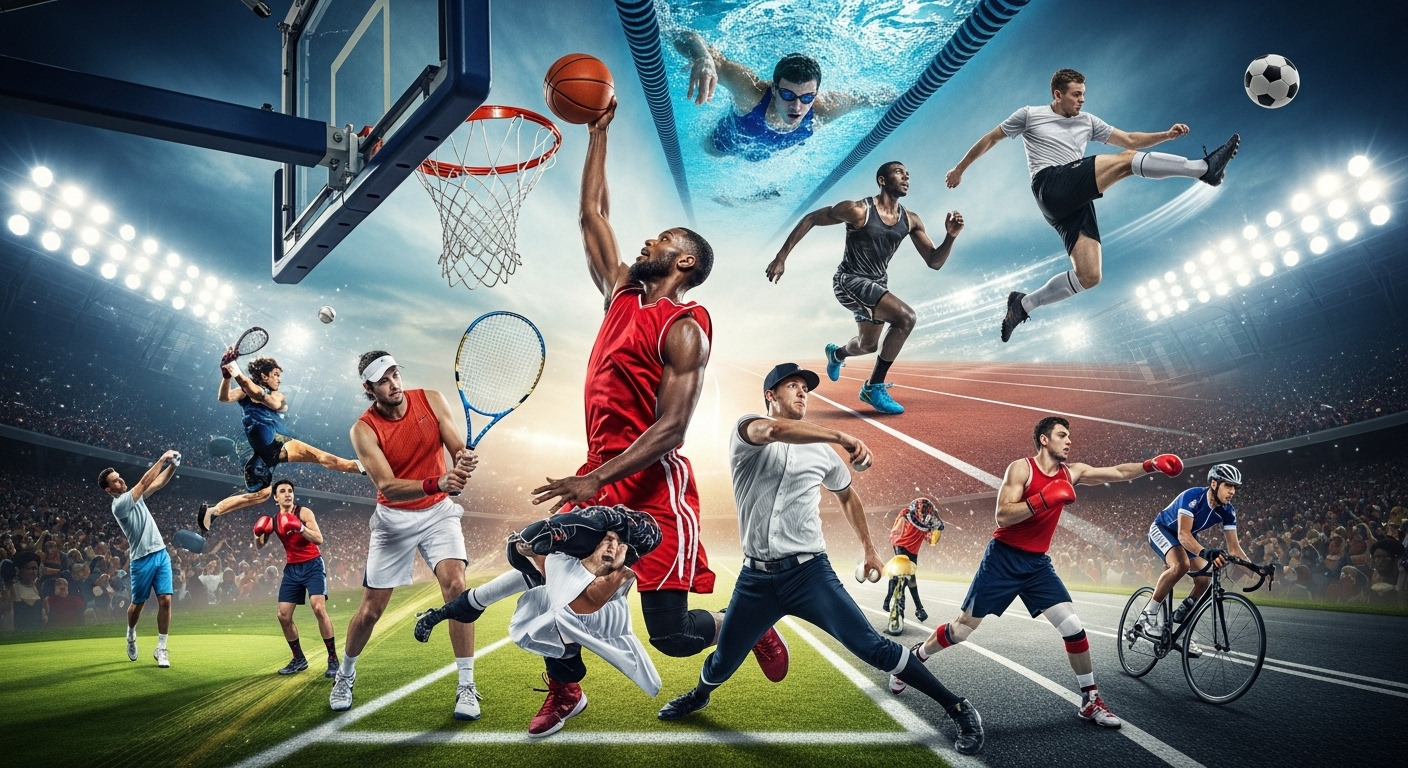
Sports are an integral part of human civilization. They have been with us since ancient times, evolving from simple games into complex, highly organized competitions that span the globe. Whether through physical contests, the thrill of competition, or the sense of community and national pride they instill, sports have always held a significant place in human history. In this blog post, we will take a journey through the fascinating evolution of sports, from their origins in ancient cultures to their modern-day form. We will explore how sports have developed, the impact they’ve had on society, and where they are headed in the future.
The Origins of Sports: Ancient Beginnings
Sports, in their most basic form, have existed for as long as human beings have walked the Earth. The earliest versions of organized sports date back to ancient civilizations where physical contests were often linked to military training, religious rituals, or festivals. While there were different forms of competition in various regions, the key elements of sports—competition, skill, and entertainment—were already in place in these early times.
The Birth of Competition in Ancient Civilizations
In ancient Egypt, physical activities such as running, swimming, and archery were not only forms of entertainment but also part of military training. The Egyptians used games to hone skills necessary for warfare. Similarly, in Mesopotamia, early forms of ball games were played, although the rules were not as formalized as the ones we see today. These early games were less about structured play and more about skill, endurance, and showcasing one’s physical prowess.
However, it was the Greeks who truly laid the foundation for the development of organized sports. The ancient Greeks held athletic competitions as part of religious festivals, the most famous of which was the Olympic Games. The first recorded Olympic Games took place in 776 BCE in Olympia, Greece, and it is from these games that many of the sports we recognize today, such as running, wrestling, and boxing, originated.
The Olympics were a grand spectacle and a symbol of Greek culture, where athletes competed for honor and glory, and the games became a unifying force among Greek city-states. The Olympic Games were an essential part of Greek society, emphasizing the connection between physical fitness, personal excellence, and cultural identity. The Greeks believed that athletic competition represented the ideal of human perfection, and they viewed the body as an expression of intellectual and spiritual beauty.
The Middle Ages: Sports and Society
After the fall of the Roman Empire, the development of sports in Europe slowed considerably. However, physical competitions did not disappear entirely. During the Middle Ages, sports took on a more localized form, often connected to the military and chivalric traditions of knights and warriors.
The Rise of Jousting and Tournaments
One of the most famous sports of the medieval period was jousting, a game where two knights on horseback would charge at each other with lances, trying to unseat their opponent. This sport, while originating as a form of combat training, evolved into a popular event at royal courts, where tournaments were held to showcase the skill and bravery of knights. Jousting was considered an honor for the knights, and the tournaments were often large social events, attracting spectators from all over Europe.
In addition to jousting, other forms of combat sports, such as sword fighting and archery, were also practiced during the medieval period. These activities were integral parts of knightly training and were considered valuable for honing the skills necessary for warfare. These tournaments laid the groundwork for the development of modern-day combat sports, including fencing and wrestling.
Ball Games in the Middle Ages
While martial sports were popular during the Middle Ages, early forms of ball games also started to emerge. Football, or what would eventually become soccer, had its roots in medieval England. The early forms of the game were played between villages and had very few rules. The games could become chaotic, with large numbers of people participating, and often involved kicking a ball from one end of the town to the other. Over time, these informal ball games began to evolve into more organized activities, with rules gradually taking shape.
The Renaissance: The Birth of Modern Sports
The Renaissance was a period of great cultural and intellectual revival in Europe, and it also marked the beginning of a more systematic approach to physical activity. As the Renaissance ideals of balance and harmony spread, so too did the appreciation for physical exercise and sports. This period saw the establishment of some of the sports that would continue to shape the future of athletics.
The Rise of Cricket and Rugby
In England, the 16th century saw the rise of cricket, which was initially played informally but began to take on more structured forms in the 17th century. By the 18th century, cricket had become an organized competition, with formal rules and clubs established across the country. The development of cricket as a sport was crucial in the development of modern-day team sports, as it laid the foundation for the establishment of leagues and tournaments.
Similarly, rugby emerged in the 19th century as a sport played at English public schools. The game was a mix of football and rugby-style rules and eventually grew into a global phenomenon, with the establishment of rugby clubs and international competitions.
Tennis and the Birth of Professional Sports
Tennis, too, traces its origins to this period. The game of tennis, as we know it today, evolved from a French game known as “jeu de paume” or “game of the palm.” Played with the hand initially, it eventually evolved into a racket sport, gaining significant popularity in the 16th century. By the 19th century, tennis had become formalized, and the first Wimbledon Championships were held in 1877, setting the stage for professional tennis as we know it today.
The Modern Era: The Rise of Global Sports
The 19th and 20th centuries brought rapid advancements in sports organization and commercialization. As industrialization, urbanization, and technological innovation swept across the globe, sports became more structured, professional, and global in their reach. This period marked the birth of the modern sports we know today, with well-defined rules, organized leagues, and widespread international appeal.
The Birth of Professional Leagues and International Competitions
In the late 19th and early 20th centuries, professional sports leagues began to form. One of the first examples of this was the formation of Major League Baseball (MLB) in the United States in 1869. MLB set the stage for the development of other professional sports leagues, including the National Football League (NFL) in 1920 and the National Basketball Association (NBA) in 1946. These leagues not only revolutionized the way sports were played but also how they were consumed. With the advent of mass media, games could now be broadcast to millions of fans around the world, bringing sports into homes and businesses across the globe.
International competitions also grew in prominence during this period. The 20th century saw the establishment of global events such as the FIFA World Cup in football (soccer) and the Summer and Winter Olympics, events that brought nations together to compete on the world stage. These international tournaments not only showcased athletic excellence but also fostered a sense of global unity and camaraderie. For many countries, these competitions became a source of national pride.
The Role of Media and Technology in Sports
The growth of sports in the 20th century was fueled by advances in media and technology. Television played a pivotal role in bringing sports to the masses, as networks began broadcasting major sporting events to audiences far and wide. The ability to watch sports live, or on a delay, opened up a new world of entertainment, with millions of fans tuning in to watch everything from the Super Bowl to the Olympics.
Technology has also transformed sports in numerous ways. Advances in equipment, training techniques, and the use of data analytics have all improved the performance of athletes and the spectacle of the games. The introduction of instant replay, for example, has revolutionized how referees make decisions during a game, providing more accurate and fair outcomes. Meanwhile, the development of new sports technologies, such as wearable fitness trackers, has enabled athletes to monitor and optimize their performance.
The Digital Age: The Future of Sports
As we move further into the 21st century, sports continue to evolve. The rise of the internet and digital technology has transformed the way we watch, play, and interact with sports. Social media platforms allow fans to follow their favorite athletes, teams, and sports events in real time, while streaming services have made it easier than ever to access live games and on-demand content from anywhere in the world.
Esports: The New Frontier of Competition
One of the most significant developments in recent years has been the rise of esports. Competitive video gaming has quickly become a multi-billion-dollar industry, attracting millions of fans and participants. Esports tournaments are now held in massive arenas, with professional players competing for enormous cash prizes. While esports might not be “traditional” sports, it is rapidly gaining recognition as a legitimate form of competition, with some countries even recognizing esports as an official sport.
The Role of Artificial Intelligence and Data Analytics
Another exciting frontier for sports lies in the use of artificial intelligence (AI) and data analytics. These technologies are already being used to enhance player performance, refine training methods, and even predict the outcomes of games. AI is being utilized to analyze player movements, monitor injury risks, and develop strategies based on large datasets, providing a level of precision and insight previously unimaginable.
Sustainability and Diversity in Sports
As sports continue to grow in popularity, there is an increasing focus on sustainability and inclusivity. Many organizations are now implementing strategies to reduce the environmental impact of sports events, from reducing carbon emissions to minimizing waste. At the same time, there is a concerted effort to make sports more inclusive, ensuring that athletes of all genders, races, and abilities have equal opportunities to compete.
Conclusion: Sports as a Universal Language
Sports have come a long way since their origins in ancient cultures. From the Olympic Games of Greece to the professional leagues of today, sports have evolved into a global phenomenon that unites people across borders and cultures. They have become a source of entertainment, national pride, and personal achievement. As we look to the future, sports will undoubtedly continue to evolve, shaped by advances in technology, changing social dynamics, and the ongoing quest for human excellence.
The one thing that remains constant, however, is the unifying power of sports. Whether through traditional athletic competitions or digital arenas like esports, sports continue to captivate and inspire millions, proving that, at their core, they are much more than games—they are a celebration of the human spirit.